Best Factoring Companies for Small Carriers
A practical comparison framework for small carriers reviewing factoring fees, recourse terms, reserves, and cash-flow fit.
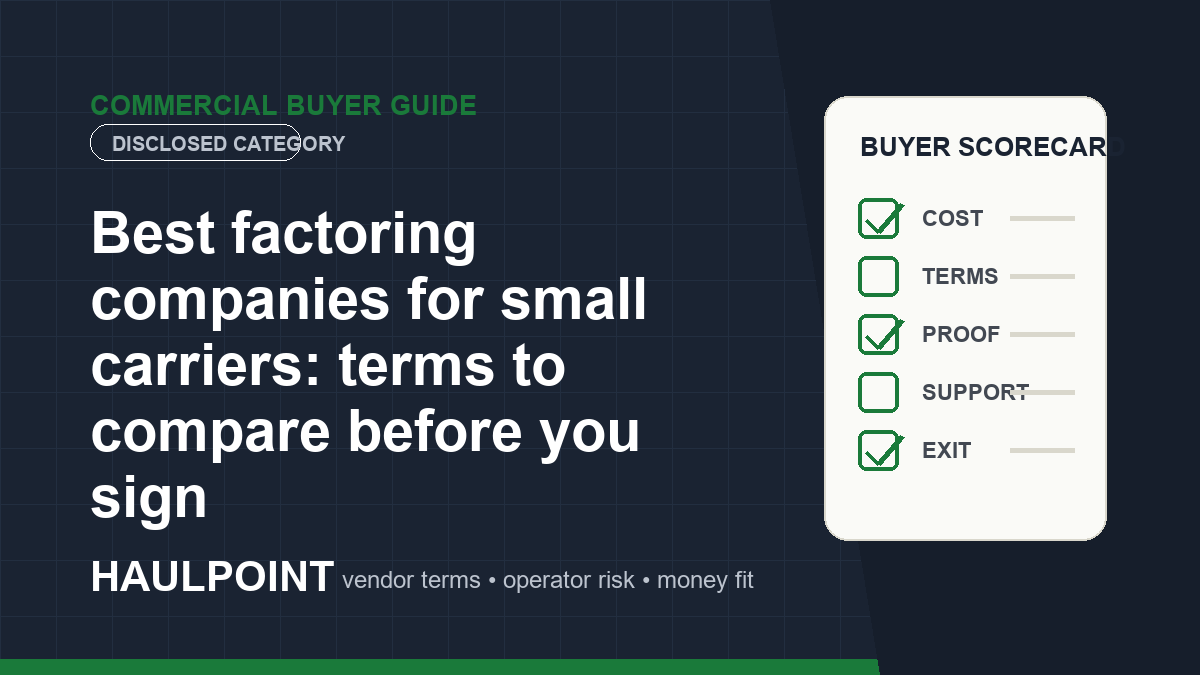
The best factoring company for a small carrier is not simply the one advertising the fastest funding. A good fit depends on your invoice volume, broker mix, cash runway, contract terms, reserve rules, and how cleanly the company handles paperwork when something goes wrong.
This page is a comparison hub for owner-operators and small fleets that want to evaluate factoring before signing a contract.
Fast answer
Start with terms, not speed. Compare recourse rules, fee structure, reserve handling, cancellation language, broker approval workflow, fuel advance conditions, and how much control the factor takes over your customer payments.
Comparison criteria
| Criterion | What to compare | Why it matters |
|---|---|---|
| Fee structure | Flat fee, tiered fee, aging fee, minimums, extra service charges. | A low starting fee can become expensive when invoices age. |
| Recourse terms | Who carries risk if the broker or shipper does not pay. | Recourse can turn old invoices into sudden cash pressure. |
| Reserve handling | Reserve percentage, release timing, deductions, and statement clarity. | Reserve confusion is one of the fastest ways to lose trust in a factoring relationship. |
| Broker checks | Credit approval speed, rejected brokers, concentration limits, and notice rules. | The factor’s broker list can affect which loads you can actually book. |
| Exit terms | Contract length, auto-renewal, termination fee, buyout process. | Bad exit language can trap a carrier after the business changes. |
Questions before signing
- Is the agreement recourse, non-recourse, or limited non-recourse?
- What happens if a broker disputes accessorials or paperwork?
- When are reserves released, and what can be deducted?
- How long is the contract, and how do you leave?
- Can you see a sample statement before signing?
Common mistakes
- Comparing only the headline fee and ignoring aging or service charges.
- Signing before understanding notice-of-assignment and customer payment control.
- Using factoring as a substitute for rate discipline or cost tracking.
- Forgetting to ask how reserves are shown and released.
Get a factoring shortlist
Tell HaulPoint your fleet size, average invoice amount, broker mix, and whether the issue is speed, cash runway, collections, or back-office cleanup. Tool-match requests can later be routed only to vetted partners or disclosed sponsor paths.
Related HaulPoint resources
This is general business education, not legal, tax, accounting, insurance, or financial advice. Review contracts with a qualified professional before signing.